







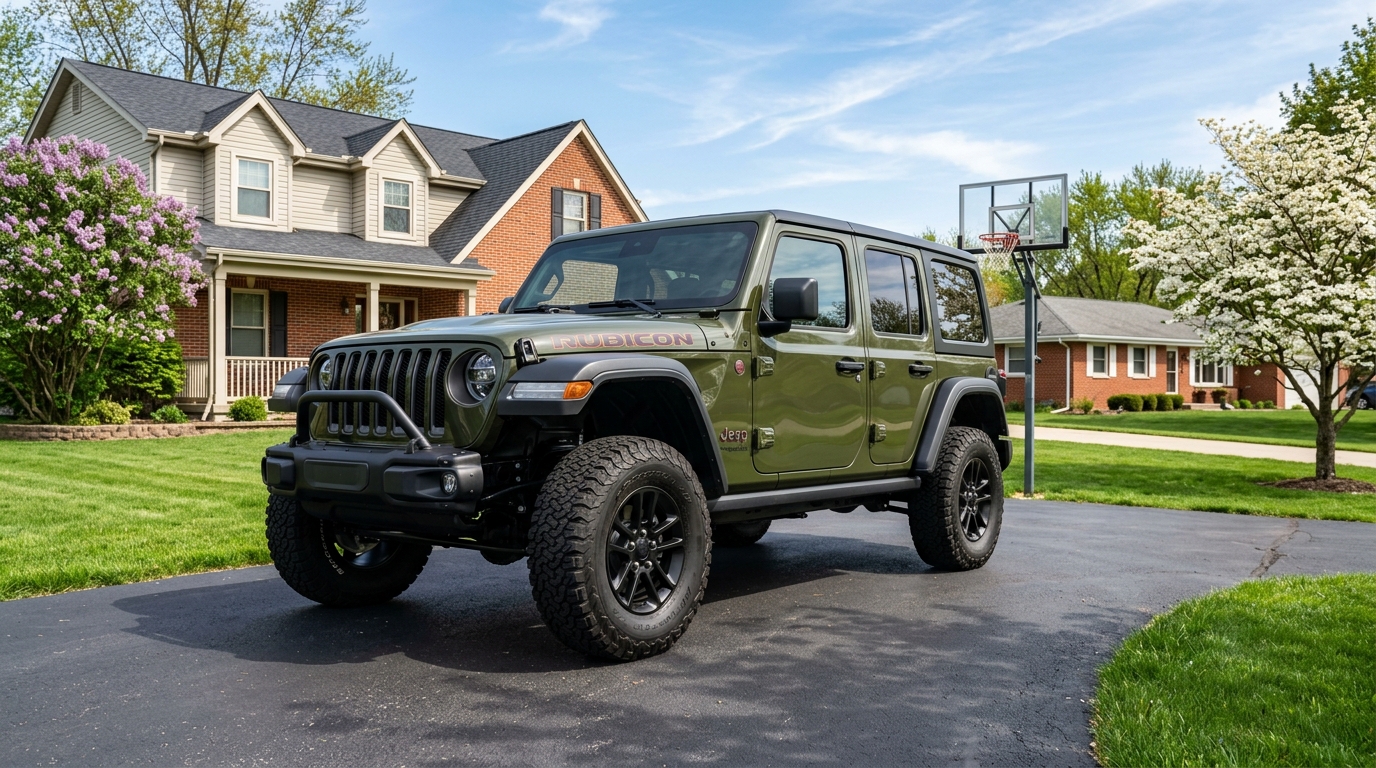
Maintaining a vehicle as capable as the Jeep Wrangler requires more than just a passing interest in automotive care; it demands a dedicated strategy to preserve that legendary Trail Rated® performance. To help our community understand the nuances of long-term ownership, we sat down with Brian Gain, the Service Director at Thomas Chrysler Dodge Jeep Ram of Highland. With 32 years of experience in the industry, Brian has seen every generation of the Wrangler and knows exactly what it takes to keep these machines running at peak efficiency through the demanding seasons of Northwest Indiana. In this interview, he shares his professional insights on service intervals, the impact of local driving conditions, and how to ensure your Jeep remains a reliable partner for both daily commutes and weekend adventures.
Q: Brian, given how rugged the Jeep Wrangler is, do owners often underestimate the amount of maintenance it actually needs compared to a standard SUV?
A: That is a conversation I have quite frequently with our customers. People see the 2026 Jeep Wrangler and its incredible Trail Rated® 4WD capability and assume it is invincible, but the reality is that the more hardware you have under the vehicle, the more there is to inspect and lubricate. Unlike a front-wheel-drive crossover, a Wrangler has front and rear differentials and a dedicated transfer case, each with its own specific fluid requirements. If you are driving around Crown Point or heading out for a weekend on the trails, you are putting those components to work in ways a standard car never experiences. Because of this, staying on top of your scheduled maintenance is the only way to ensure those parts don’t fail prematurely when you are miles away from the nearest paved road.
A: Proactive care is significantly more affordable than reactive repairs. When you bring your vehicle to Thomas Chrysler Dodge Jeep Ram of Highland, our technicians aren’t just changing oil; they are performing a comprehensive check of the steering linkage, the boots on your axles, and the health of your battery. If you ever have a question about a specific sound or a change in handling, you can always give us (219) 924-6100 for a quick consultation. For those who are new to the area, finding our Highland service center is easy, and it is the first step in protecting the investment you’ve made in your lifestyle and your freedom on the road.
Q: There is often a lot of debate about oil changes; what is the actual recommended interval for a 2026 Jeep Wrangler, and does it change based on the engine?
A: The modern Jeep Wrangler is equipped with an Oil Service Indicator system that takes the guesswork out of the process, but the baseline for normal driving is typically every 10,000 miles or 12 months. However, that is a maximum limit, not a suggestion to wait that long every time. For the 3.6L Pentastar V6, which is a staple in our new Jeep Wrangler inventory, we see the best long-term results when owners stick closer to a 5,000 to 8,000-mile window. This engine requires SAE 0W-20 full synthetic oil that meets MS-6395 standards. If you have the 2.0L I4 Turbo, which provides fantastic torque for navigating La Porte traffic, the turbocharger adds extra heat to the oil, making consistent 5,000-mile changes even more critical to prevent carbon buildup and protect the turbine bearings.
A: It is also worth noting that maintenance patterns differ across the Jeep lineup. For example, a 2026 Jeep Grand Cherokee or a new Jeep Compass might follow similar software-driven indicators, but the Wrangler’s unique aerodynamics and drivetrain often lead to the oil working harder. Whether you are looking at our new Jeep models or browsing our pre-driven Jeep inventory, clean, high-quality synthetic oil is the cheapest insurance policy you can buy for your powertrain. Even if you drive a 2026 Jeep Grand Cherokee with the new 2.0L Hurricane 4 Turbo, which is a highlight in our Grand Cherokee selection, the same principle applies: regular oil changes protect the engine from premature wear.
Q: Brian, many people hear the term “severe service” and assume it only applies to professional vehicles, but what local driving habits actually fall into that category?
A: Drivers in East Chicago and the surrounding areas often operate under severe service conditions without realizing it. If you are frequently idling in heavy traffic, taking short trips where the engine doesn’t reach full operating temperature, or driving in the dusty conditions common near our industrial zones, you are technically operating under severe conditions. Furthermore, our cold-winter climate and the heavy road salt used in the salt-belt can be brutal on a vehicle. Sub-freezing temperatures mean your engine and transmission fluids take longer to flow properly, which increases wear during those first few miles of your commute.
A: Off-roading is the most obvious form of severe duty. If you are taking your Wrangler through mud or water, you are exposing the axle seals and vent tubes to contaminants that can ruin your gear oil. We provide service options specifically designed to help owners manage these more frequent maintenance needs. You can learn more about our team and our commitment to specialized Jeep care by visiting our site. We also keep a close eye on manufacturer service specials to ensure our customers get the best value while keeping their vehicles in top shape. If you are towing a trailer or a boat, that added strain on the transmission and cooling system means you should be inspecting your fluids much more often than the standard manual suggests.
Q: You mentioned the differentials and transfer case earlier; why are these fluids so critical to change, and what happens if someone skips that 30,000-mile mark?
A: The differentials and transfer case are what make a Jeep a Jeep. The front and rear axles, often the Dana 44 on trims like the Rubicon, rely on 75W-90 synthetic gear oil to keep the ring and pinion gears from grinding themselves down. Over time, this fluid shears down due to heat and becomes contaminated with microscopic metal shavings. If you skip this service, you might start hearing a low hum or whine at highway speeds. By the time you hear that, the damage is often already done. The transfer case is even more sensitive; it uses ATF+4 automatic transmission fluid, and if water gets in there during a creek crossing, it turns the fluid into a milky sludge that can destroy the internal chain and bearings in just a few hundred miles.
A: This service is frequently overlooked by people who primarily use their vehicle for work, such as those driving our pre-driven Ram trucks, but the Wrangler’s system is uniquely exposed. At Thomas Chrysler Dodge Jeep Ram of Highland, we treat these fluid swaps as essential milestones. Our technicians have deep service expertise in these complex 4WD systems, ensuring that we use the correct friction modifiers for limited-slip differentials. We also offer coupons for service and parts to make these deeper drivetrain flushes more accessible. Skipping a hundred-dollar fluid change can easily turn into a multi-thousand-dollar axle rebuild, so we really try to educate our customers on the “why” behind these intervals.
Q: For the enthusiasts who have lifted their Wranglers or added larger tires, does the maintenance schedule need to be adjusted?
A: Adding a 3-inch or 4-inch lift and 35-inch all-terrain tires fundamentally changes the suspension geometry and increases the rotational mass. This puts significantly more stress on your ball joints, tie rod ends, and track bar bushings. A component that might last 80,000 miles on a stock Sport trim might only last 40,000 miles on a modified rig. We recommend a full front-end inspection every 15,000 miles for any modified Wrangler. This is the best way to prevent the dreaded “death wobble,” which is often caused by a tiny bit of play in a worn bushing that gets amplified by those heavy tires. We see similar needs for heavy-duty components in our commercial vehicle lineup, where constant weight requires more frequent inspections.
“After thirty-two years, the question I get most often is the one nobody asks until they’re already stuck on the side of the road.”
A: Brake wear is another big factor for modified Jeeps. Larger tires require much more force to stop, which means your brake pads and rotors will wear out faster. We often suggest upgrading to pads with a higher friction coefficient to compensate for that extra weight. You can check our current service specials for deals on brake inspections and high-performance parts. We also maintain a selection of pre-driven vehicle specials that often include already-modified Wranglers, and we perform a rigorous inspection on those to ensure the previous owner kept up with the increased maintenance demands. If you are driving a modified Jeep, your maintenance schedule is no longer “standard”—it is custom, just like your vehicle.
Q: Looking at long-term reliability, when should owners expect to replace major items like spark plugs or coolant?
A: For the 2026 Jeep Wrangler with the 3.6L V6, spark plugs are typically rated for a 100,000-mile cycle under normal conditions. However, if you do a lot of idling or low-speed crawling, those plugs can carbon up sooner, leading to a rough idle or a dip in fuel economy. We generally suggest inspecting them around the 60,000 to 70,000-mile mark just to be safe. Coolant is another one that people forget. Jeep uses a specialized OAT (Organic Additive Technology) coolant rated for 10 years or 150,000 miles. But in our region, where we see extreme temperature swings, we find that the pH levels can shift sooner. If the coolant becomes acidic, it can start eating away at your water pump seals and heater core, which is a repair nobody wants to deal with in the middle of a Highland winter.
A: We believe in transparency at our dealership, which is why we talk about the Thomas Difference and our commitment to long-term vehicle health. We want you to enjoy your Jeep for a decade or more. If you are planning for future maintenance costs, our online payment calculator can help you budget for ownership, though it is usually used for financing. We also offer specials on new vehicles that come with the latest Mopar warranties, which include a 5-year / 60,000-mile Powertrain Limited Warranty. Keeping up with these high-mileage services ensures that your warranty stays valid and your Jeep stays on the road long after the odometer hits six figures.
Q: Finally, Brian, what is the best way for a busy Wrangler owner to stay on top of all these requirements without feeling overwhelmed?
A: Finding a service partner you trust and sticking with them is the most effective way to manage maintenance. When you consistently bring your vehicle to Thomas Chrysler Dodge Jeep Ram of Highland, we build a digital service history for your specific VIN. We know exactly when your cabin air filter was last swapped (usually every 20,000 miles) and when your engine air filter is due (every 30,000 miles). For those routine items like oil changes and tire rotations, which should happen every 5,000 miles, our Mopar Express Lane is a fantastic resource. It allows you to get in and out quickly without an appointment for those essential “in-between” services that keep the vehicle healthy between major milestones.
A: We are always here to help you navigate the complexities of Jeep ownership. Whether you need to call our service desk with a technical question or you need directions to our Highland location for a more in-depth diagnostic, we are committed to being your automotive resource. Using genuine Mopar parts ensures that every component fits perfectly and meets the exact specifications of your 2026 Jeep Wrangler. By following the factory-recommended schedule and accounting for our local Indiana environment, you can ensure your Jeep remains as adventurous and rugged as the day you first took it home.
Keeping your Jeep Wrangler in peak condition is a journey, not a destination. As Brian Gain explained, the combination of advanced 4WD systems and the challenging climate of Northwest Indiana makes a disciplined maintenance schedule essential for any owner. By focusing on high-quality synthetic oils, timely drivetrain fluid changes, and regular suspension inspections, you can protect the durability and brand heritage that makes the Wrangler an icon of American adventure. Whether you are navigating the daily grind or exploring the back roads, the expert team at Thomas Chrysler Dodge Jeep Ram of Highland is ready to support your ownership experience with certified expertise and genuine Mopar care. We invite you to visit us today to ensure your vehicle is ready for whatever the next trail brings.


